Table of Contents

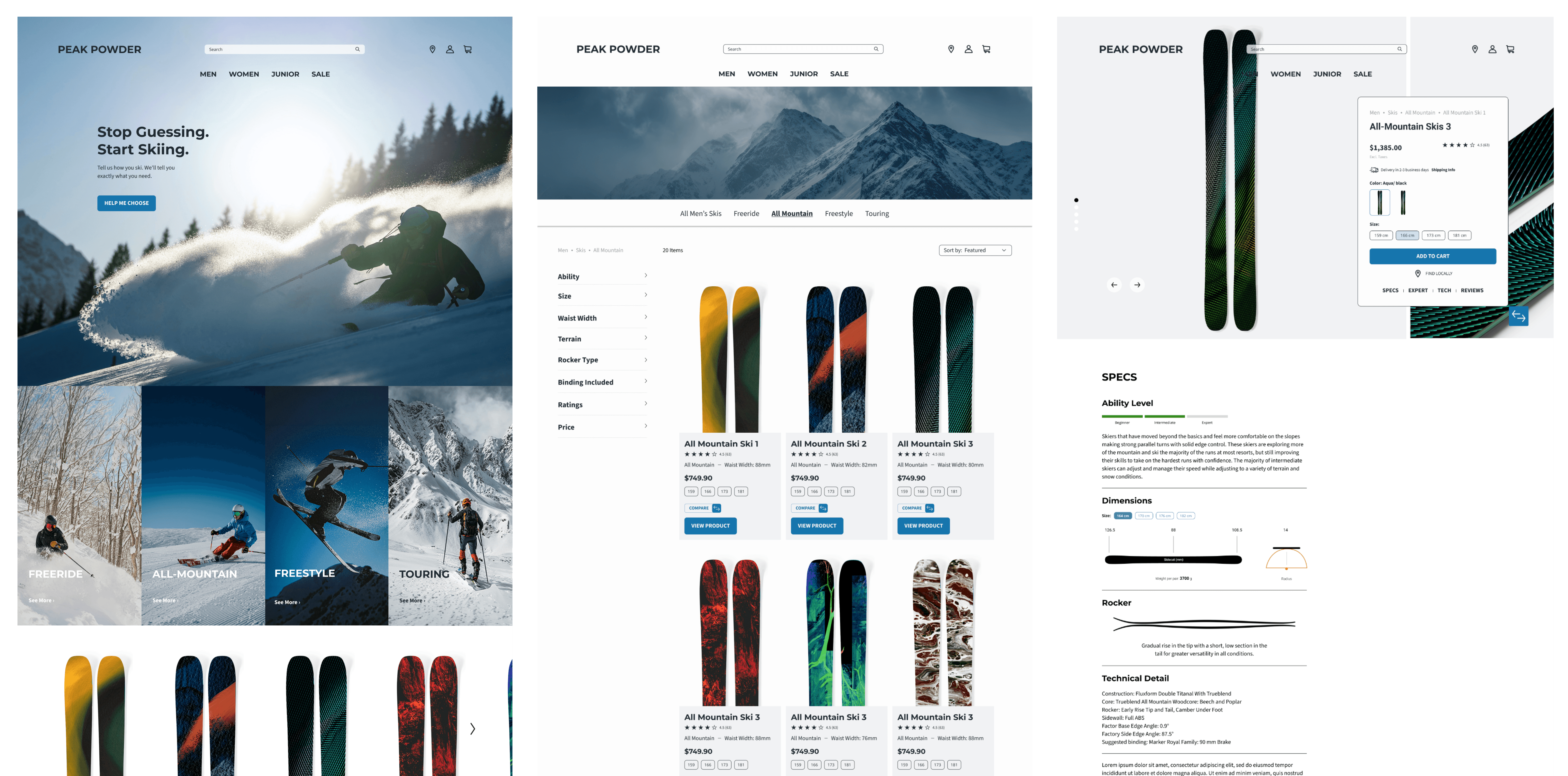
Designing Peak Powder — a ski gear e-commerce experience that transforms choice paralysis and checkout friction into confident, frictionless purchases.
Role
Role
UI/ UX Designer
UI/ UX Designer
Timeline
Timeline
July 2025-
February 2026
July 2025-
February 2026
Tools
Tools
Figma
Illustrator
Photoshop
Figma
Illustrator
Photoshop
The Brief
The Brief
Designing Peak Powder — a ski gear e-commerce experience that transforms choice paralysis and checkout friction into confident, frictionless purchases.
Designing Peak Powder — a ski gear e-commerce experience that transforms choice paralysis and checkout friction into confident, frictionless purchases.
50%
Browse Abandonment
Users view 7+ pages, then leave
Users view 7+ pages, then leave
70%
Cart Abandonment
Lost at mandatory account creation
Lost at mandatory account creation
These numbers told a clear story: buyers were genuinely interested, they were deep in the site, but the experience was losing them. The first number pointed to choice paralysis. The second pointed to checkout friction.
These numbers told a clear story: buyers were genuinely interested, they were deep in the site, but the experience was losing them. The first number pointed to choice paralysis. The second pointed to checkout friction.
"Skiers aren't leaving because they don't want to buy. They're leaving because the experience doesn't help them decide and then it puts a wall between them and checkout."
The Research
The Research
With the business problem defined, three research questions shaped the discovery phase:
With the business problem defined, three research questions shaped the discovery phase:
1.
What are the most effective industry solutions for helping users differentiate between products with complex technical features without requiring them to visit multiple pages?
What are the most effective industry solutions for helping users differentiate between products with complex technical features without requiring them to visit multiple pages?
2.
What UI patterns and checkout strategies are competitors using to reduce drop-off at the registration or account-creation stage?
What UI patterns and checkout strategies are competitors using to reduce drop-off at the registration or account-creation stage?
3.
What is the standard for implementing a high-conversion guest checkout that captures required user data without adding friction?
What is the standard for implementing a high-conversion guest checkout that captures required user data without adding friction?
Methodology
I combined secondary research with a structured competitive analysis. The goal was to understand what already worked in the market and where the gaps were.
I combined secondary research with a structured competitive analysis. The goal was to understand what already worked in the market and where the gaps were.
I analyzed five industry articles covering cart abandonment, guided selling, AI chatbots, AI-driven personalization, and checkout optimization. The research pointed to four features worth exploring further:
I analyzed five industry articles covering cart abandonment, guided selling, AI chatbots, AI-driven personalization, and checkout optimization. The research pointed to four features worth exploring further:
Guest Checkout
Product Comparison

Guided Selling
AI Chatbot & Personalization
Then conducted a structured competitive analysis across five categories: guided selling quizzes, comparison charts, checkout processes, AI chatbot assistants, and AI personalization.
Then conducted a structured competitive analysis across five categories: guided selling quizzes, comparison charts, checkout processes, AI chatbot assistants, and AI personalization.
The Design Challenge
The Design Challenge
How do we help someone who has skied twice feel as confident buying skis as someone who has been on the mountain for 20 years? And how do we do it without making the expert feel like they're being treated like a beginner?
How do we help someone who has skied twice feel as confident buying skis as someone who has been on the mountain for 20 years? And how do we do it without making the expert feel like they're being treated like a beginner?
The target audience spans total beginners and serious experts, both landing on the same site, with completely different needs. The design had to serve both without compromising either.
Core Design Solutions
Core Design Solutions

The Ski Finder Quiz
for buyers who don't know where to start
Comparison Tool
for buyers who want to decide for themselves
Guest Checkout
removing the registration wall
User Flow
User Flow
I mapped three distinct user flows based on how a buyer might enter the site:
I mapped three distinct user flows based on how a buyer might enter the site:
Guided flow
Guided flow
User doesn't know what they want → Homepage quiz entry point → Quiz (4 steps) → Personalized results (4 skis) → Product Detail Page → Add to Cart → Guest Checkout → Confirmation
User doesn't know what they want → Homepage quiz entry point → Quiz (4 steps) → Personalized results (4 skis) → Product Detail Page → Add to Cart → Guest Checkout → Confirmation
Browse-first flow
Browse-first flow
User knows the category → Product Listing Page (with filtering) → Comparison Tool → Product Detail Page → Add to Cart → Guest Checkout→ Confirmation
User knows the category → Product Listing Page (with filtering) → Comparison Tool → Product Detail Page → Add to Cart → Guest Checkout→ Confirmation
Expert flow
Expert flow
User knows exactly what they want → Search or direct PLP navigation → Product Detail Page → Add to Cart → Guest Checkout → Confirmation
User knows exactly what they want → Search or direct PLP navigation → Product Detail Page → Add to Cart → Guest Checkout → Confirmation
Wireframe Focus Areas
Wireframe Focus Areas
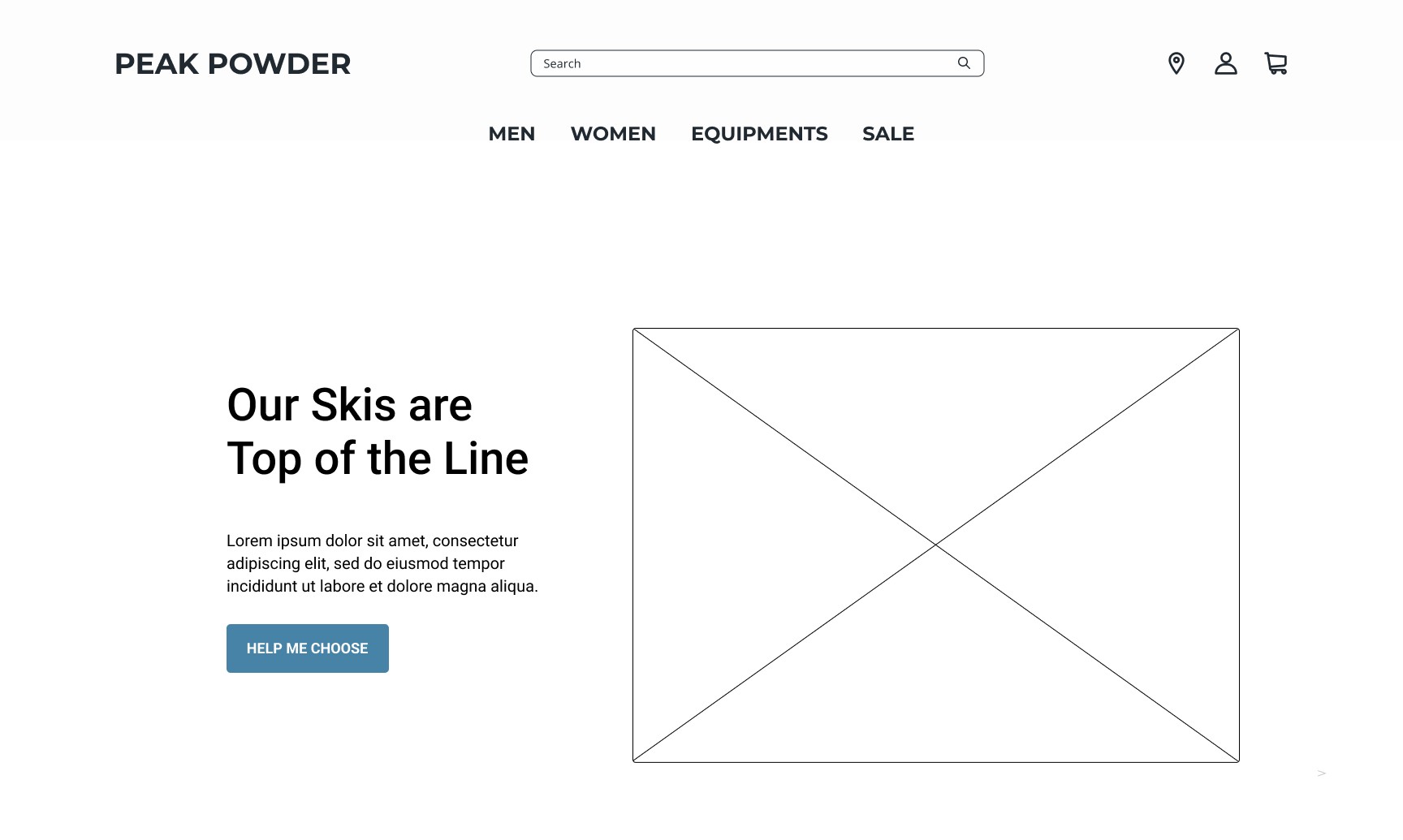
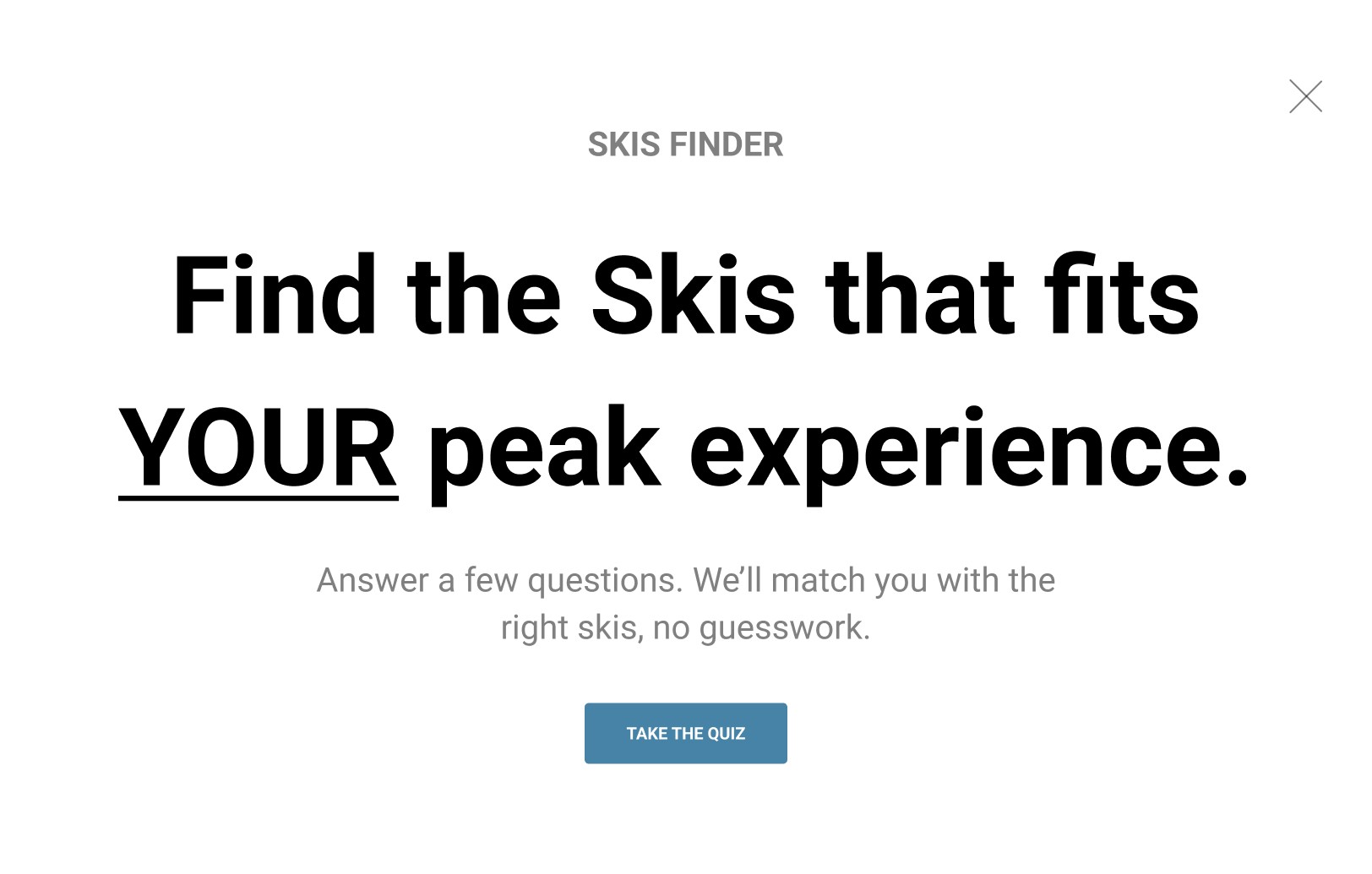
Low-fidelity wireframes were built for every screen in all three flows. Key decisions made at the wireframe stage:
Low-fidelity wireframes were built for every screen in all three flows. Key decisions made at the wireframe stage:
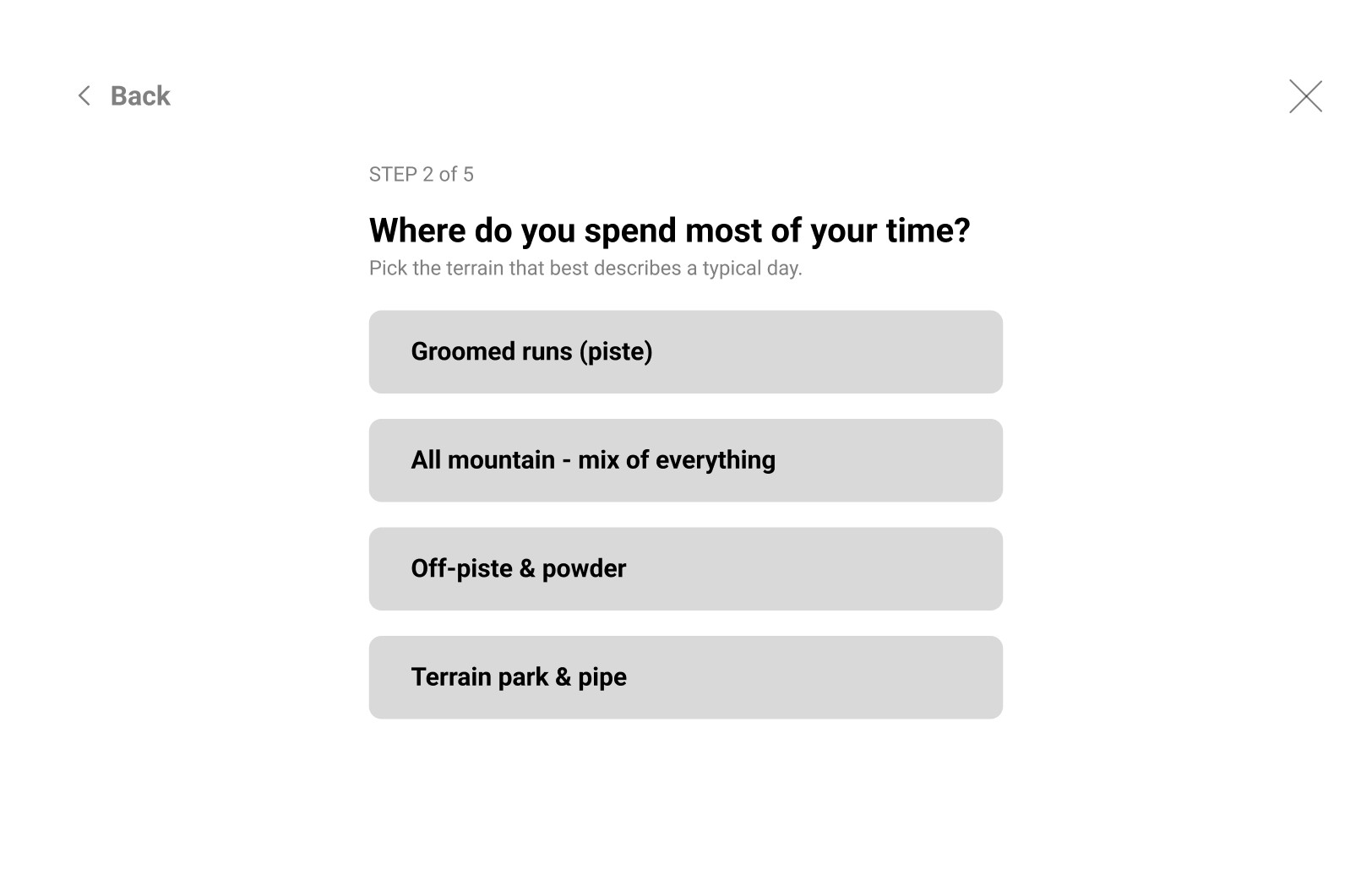
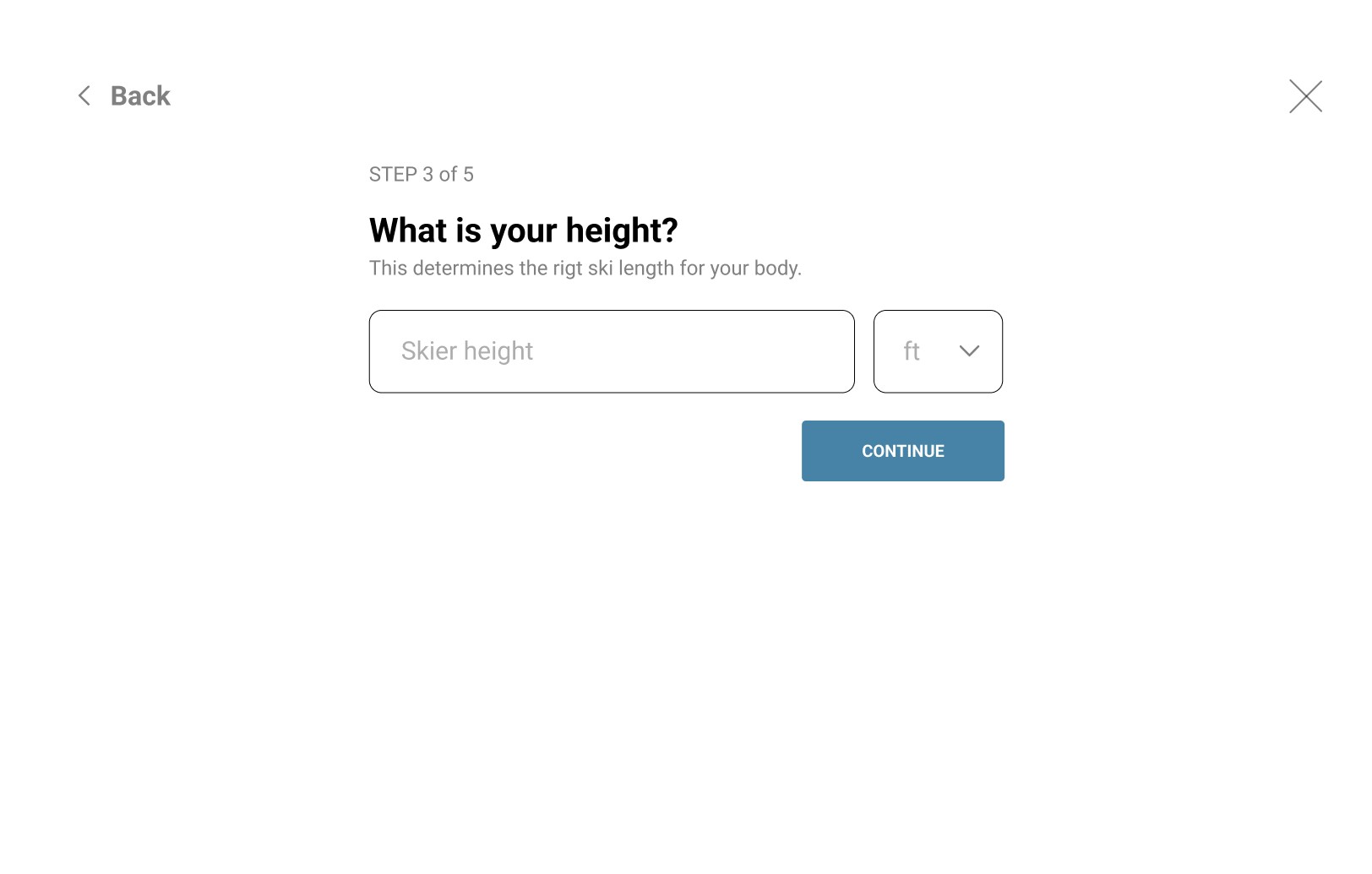
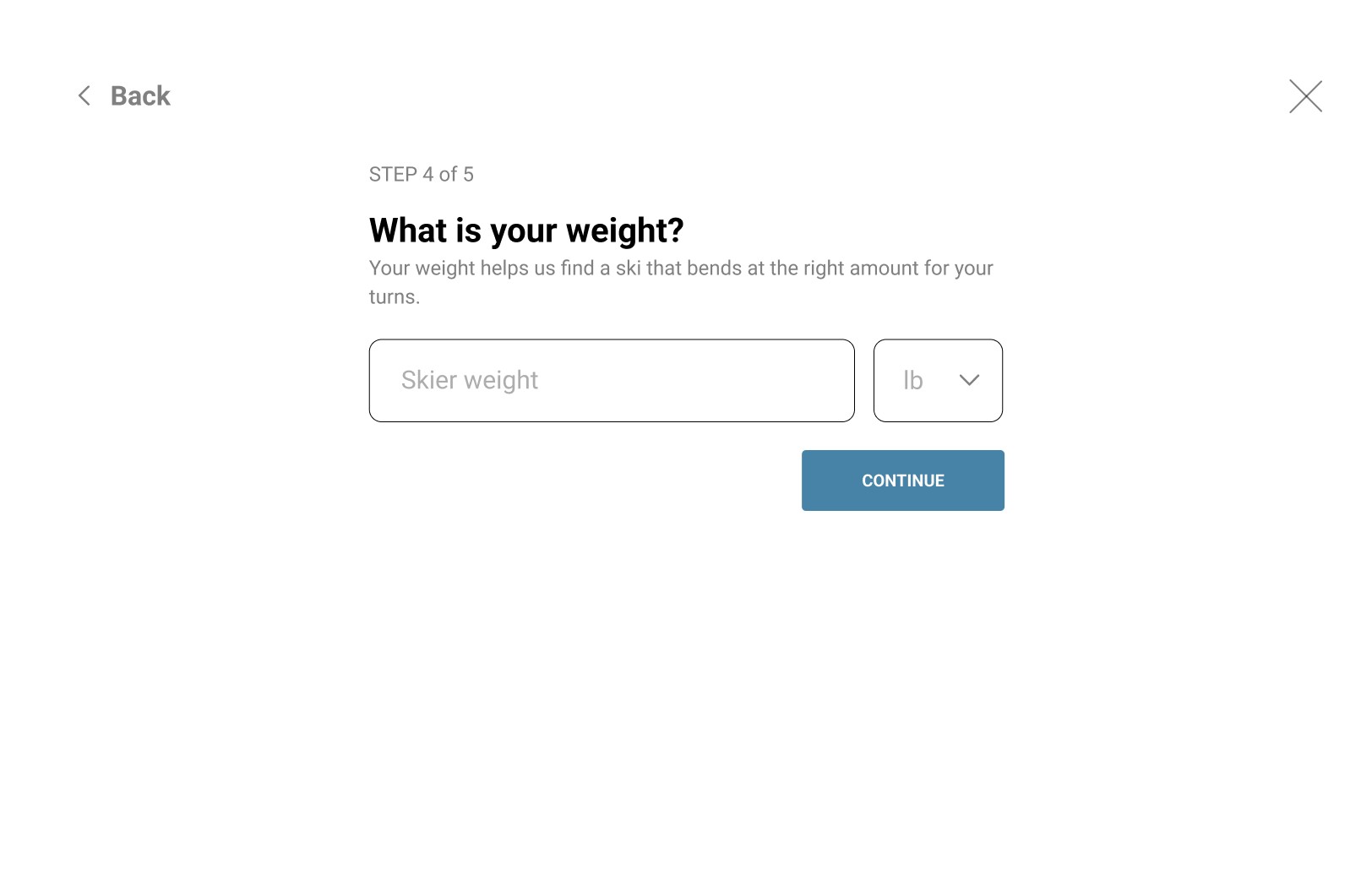
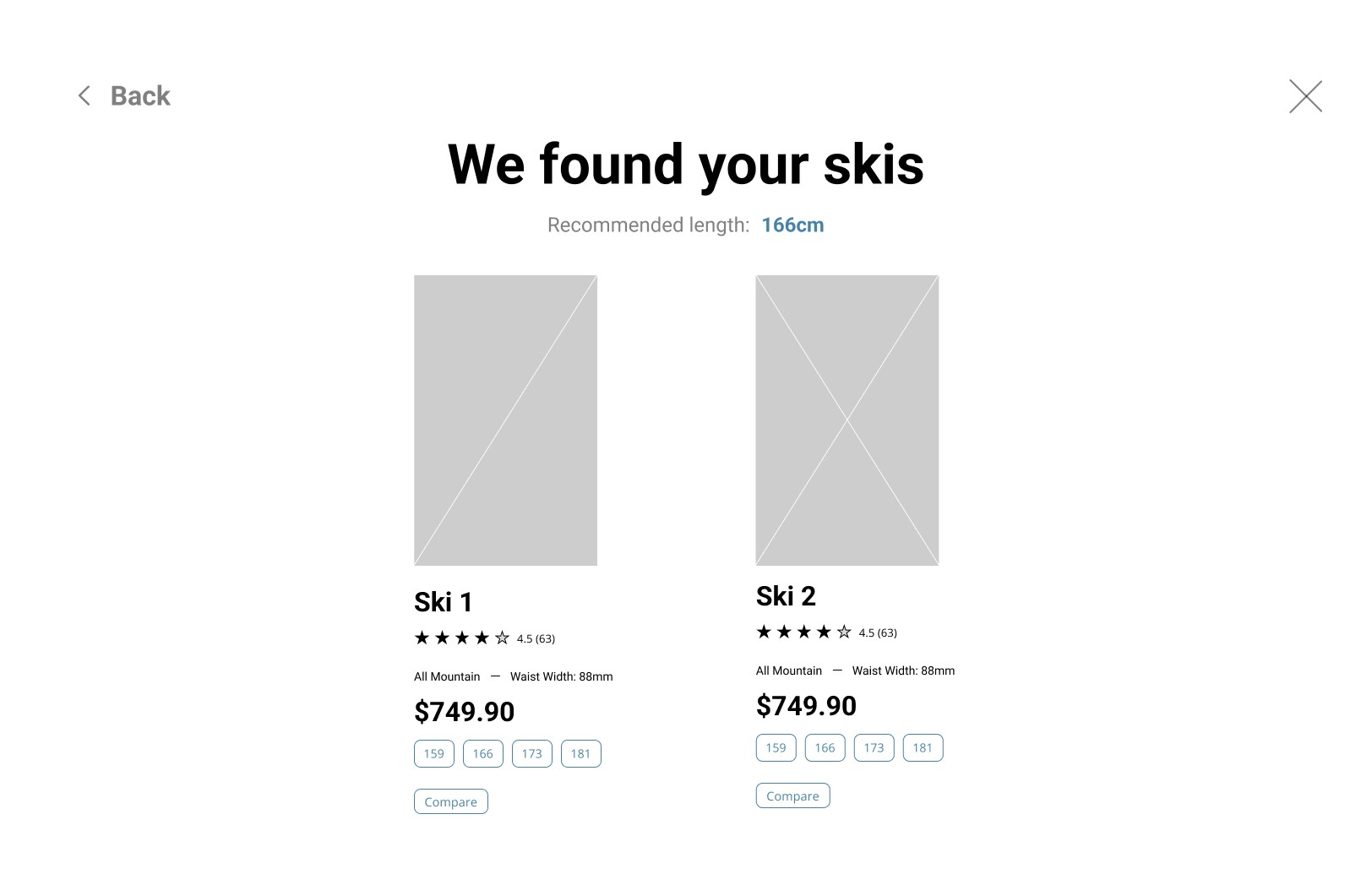
Guided Selling Quiz
Guided Selling Quiz
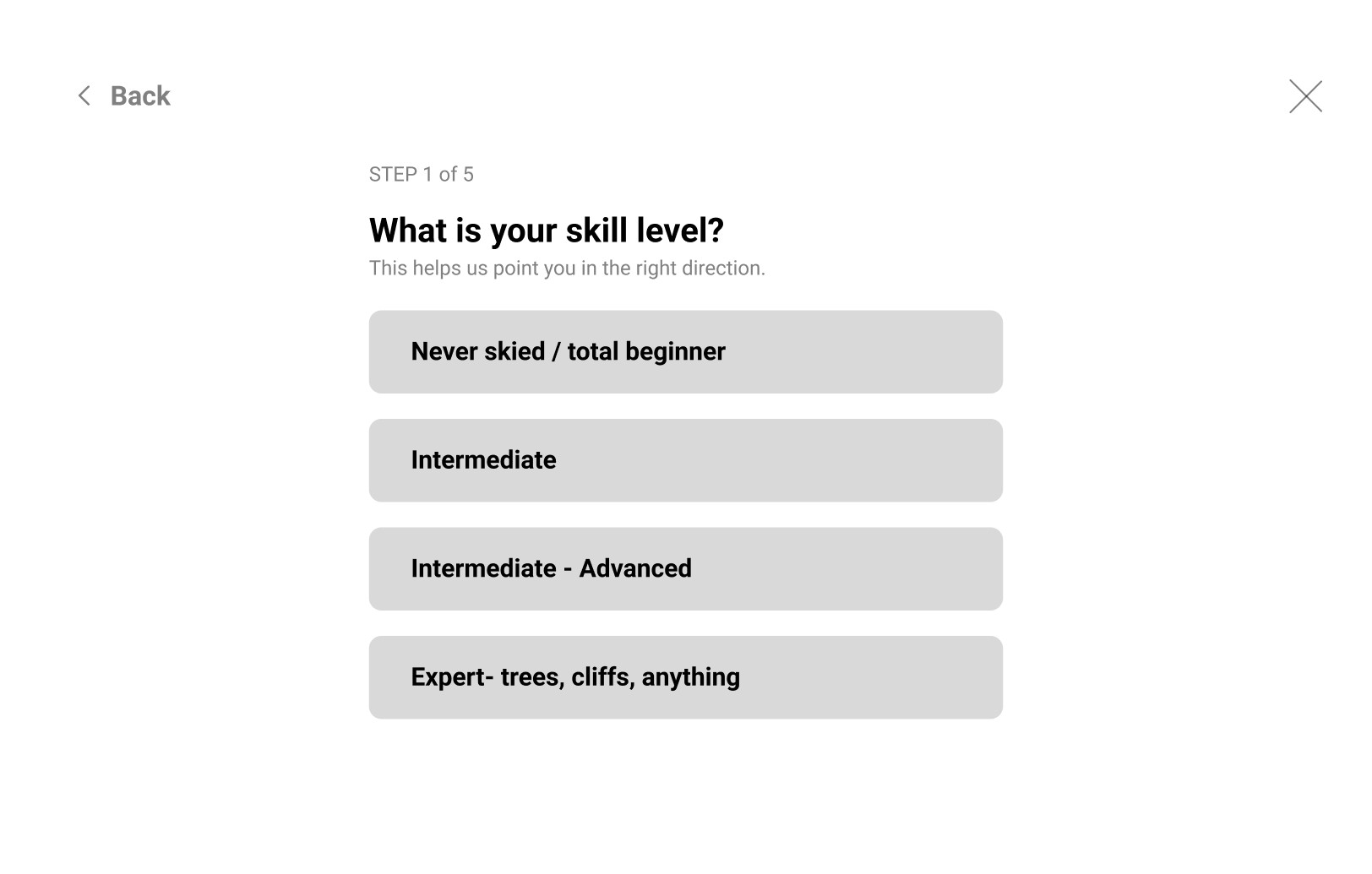
Progress indicator visible throughout.
Each screen focused on a single question.
Results page shows 2 cards with essential info: name, price, waist, and length.
Back button to edit answer.
Exit button to go back to the main page.
Progress indicator visible throughout.
Each screen focused on a single question.
Results page shows 2 cards with essential info: name, price, waist, and length.
Back button to edit answer.
Exit button to go back to the main page.
Comparison Page
Comparison Page
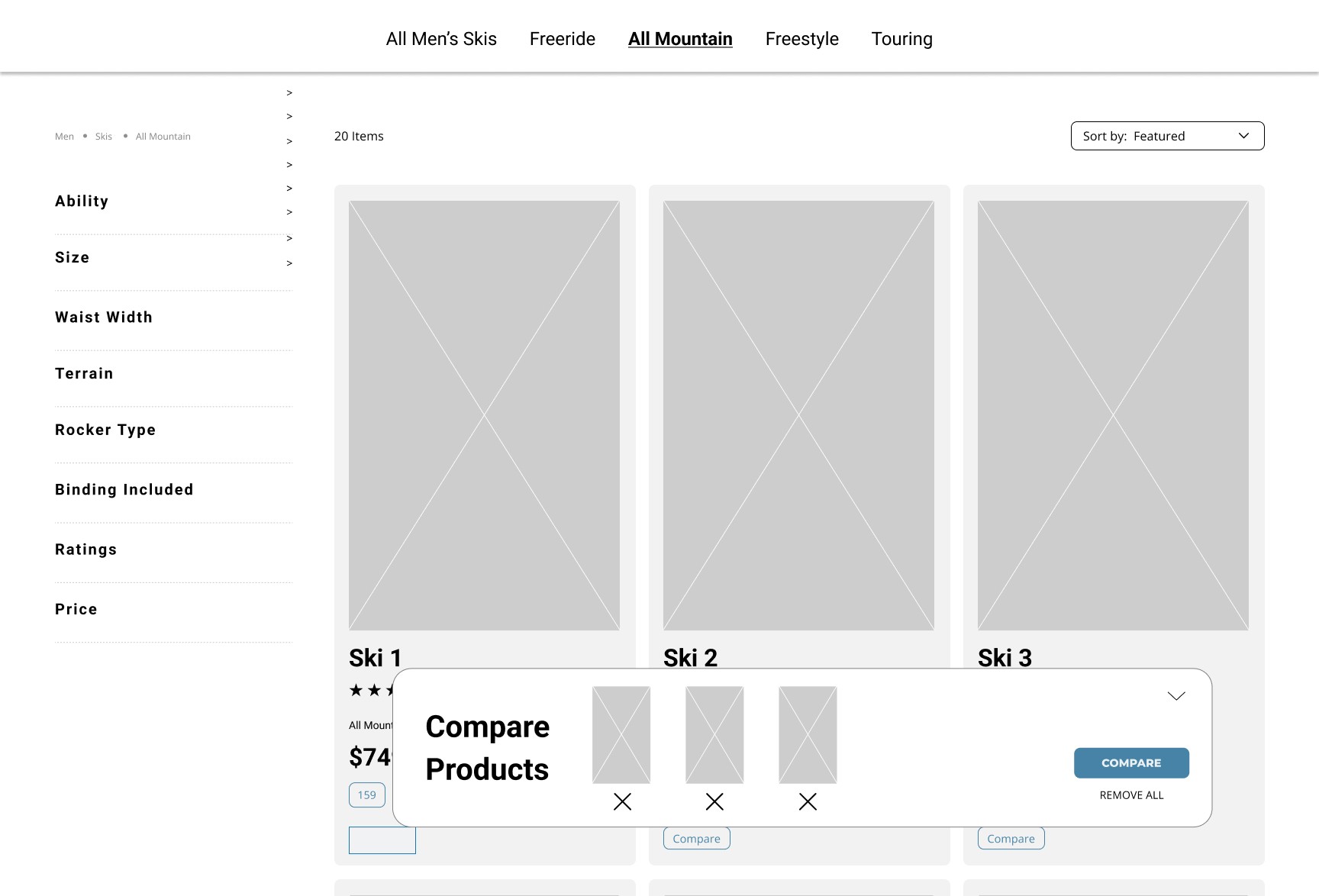
When adding an item to be compared, a comparison preview bar shows at the bottom of the PLP. The bar persists throughout the page but user also have the choice to hide it.
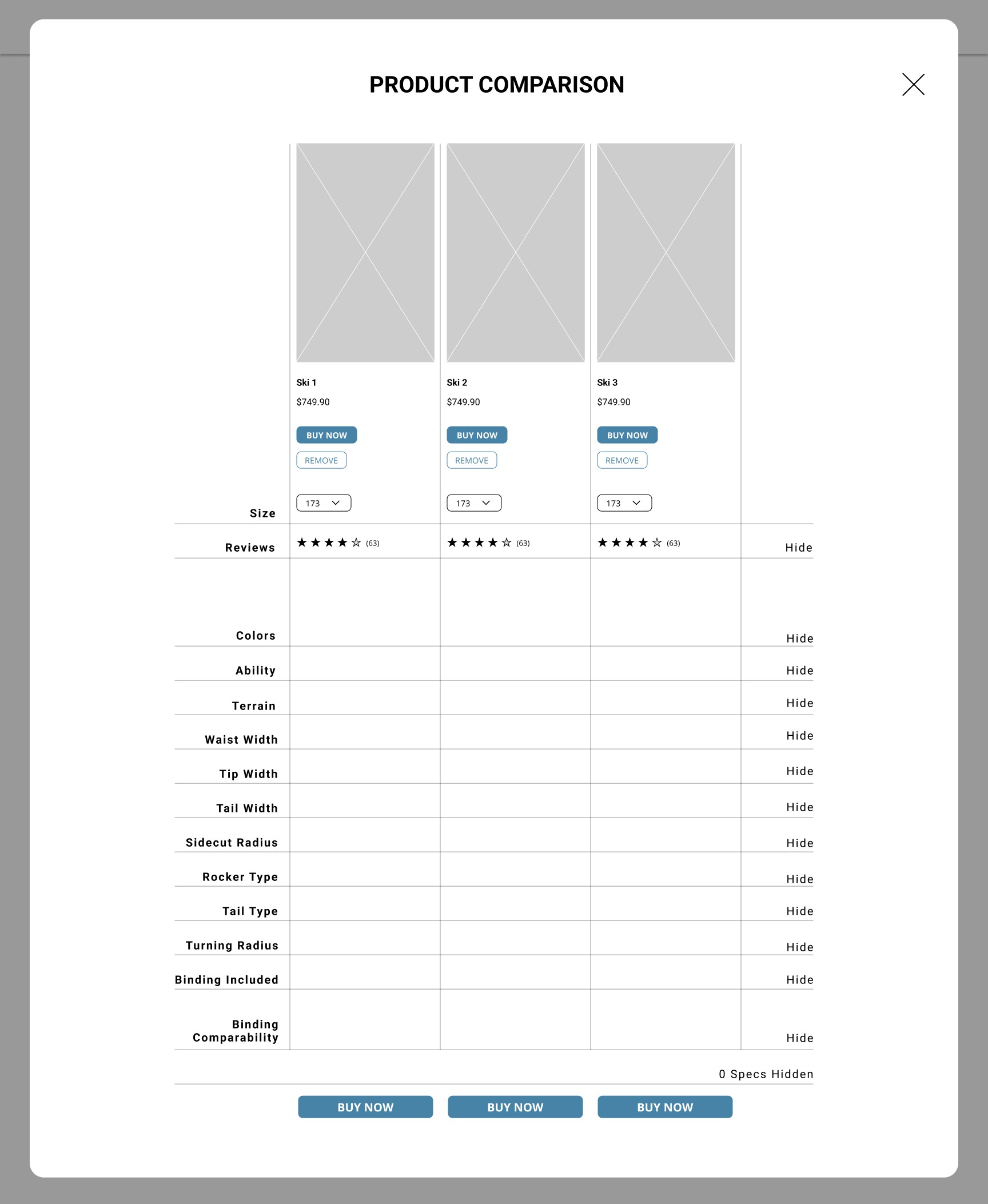
Modal overlay with key specs at the top.
Top info sticks to the top of the page. The user is able to look through the chart with the main information at the top.
Hide buttons to hide any row that is not important to the user.
When adding an item to be compared, a comparison preview bar shows at the bottom of the PLP. The bar persists throughout the page but user also have the choice to hide it.
Modal overlay with key specs at the top.
Top info sticks to the top of the page. The user is able to look through the chart with the main information at the top.
Hide buttons to hide any row that is not important to the user.
Checkout Process
Checkout Process
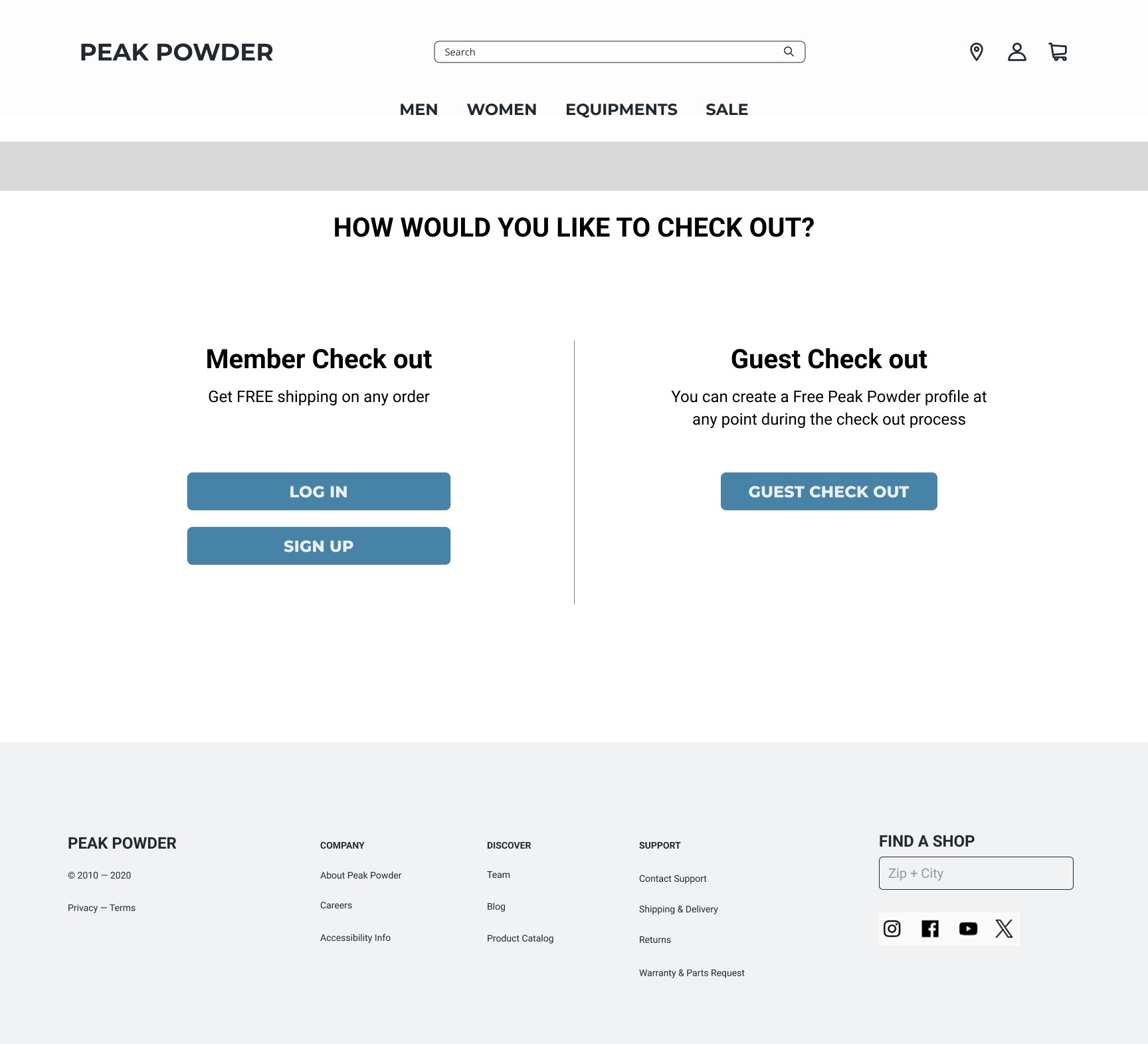
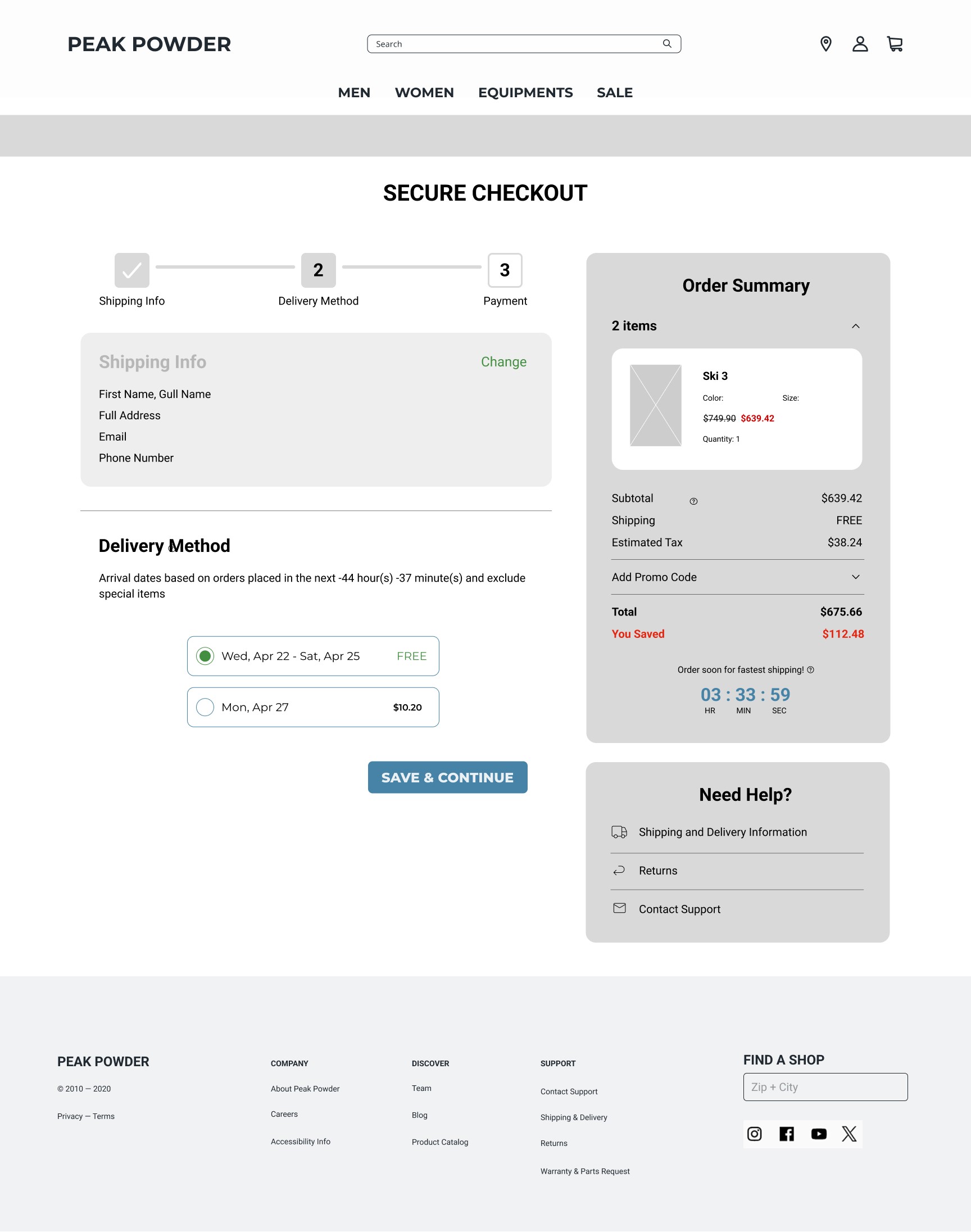
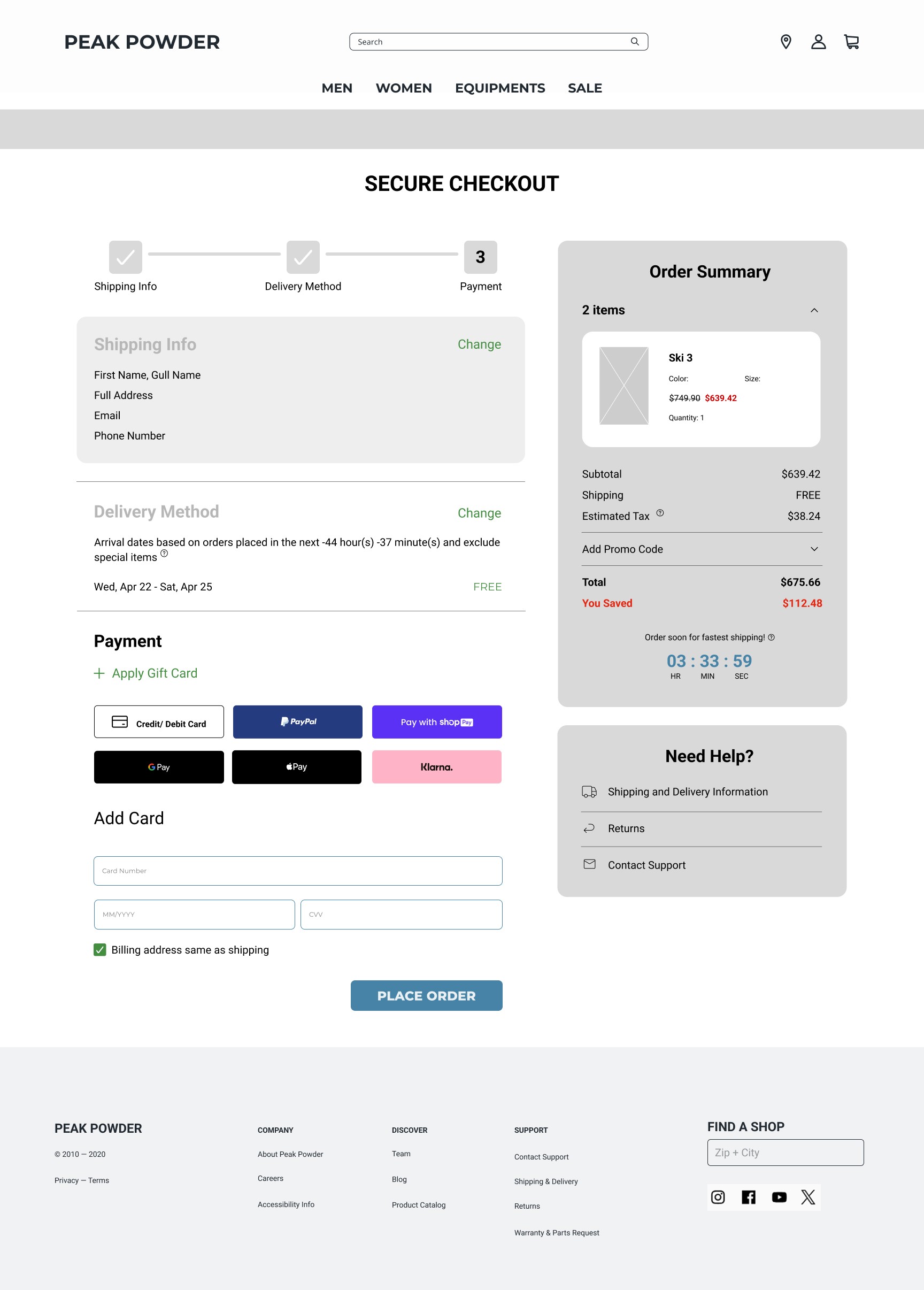
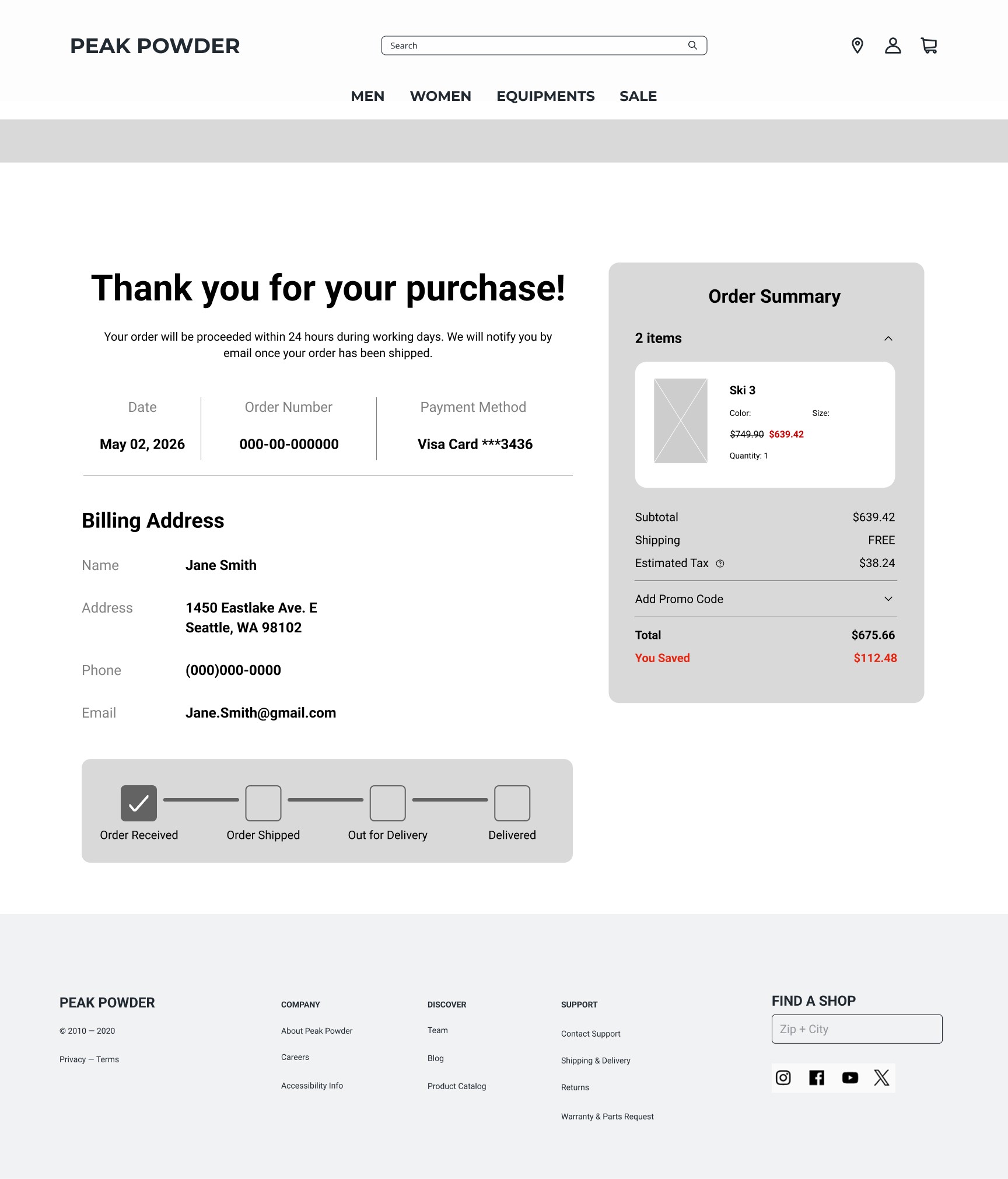
Two-column layout with member Sign In and Guest Checkout. Trust statement beneath the guest checkout.
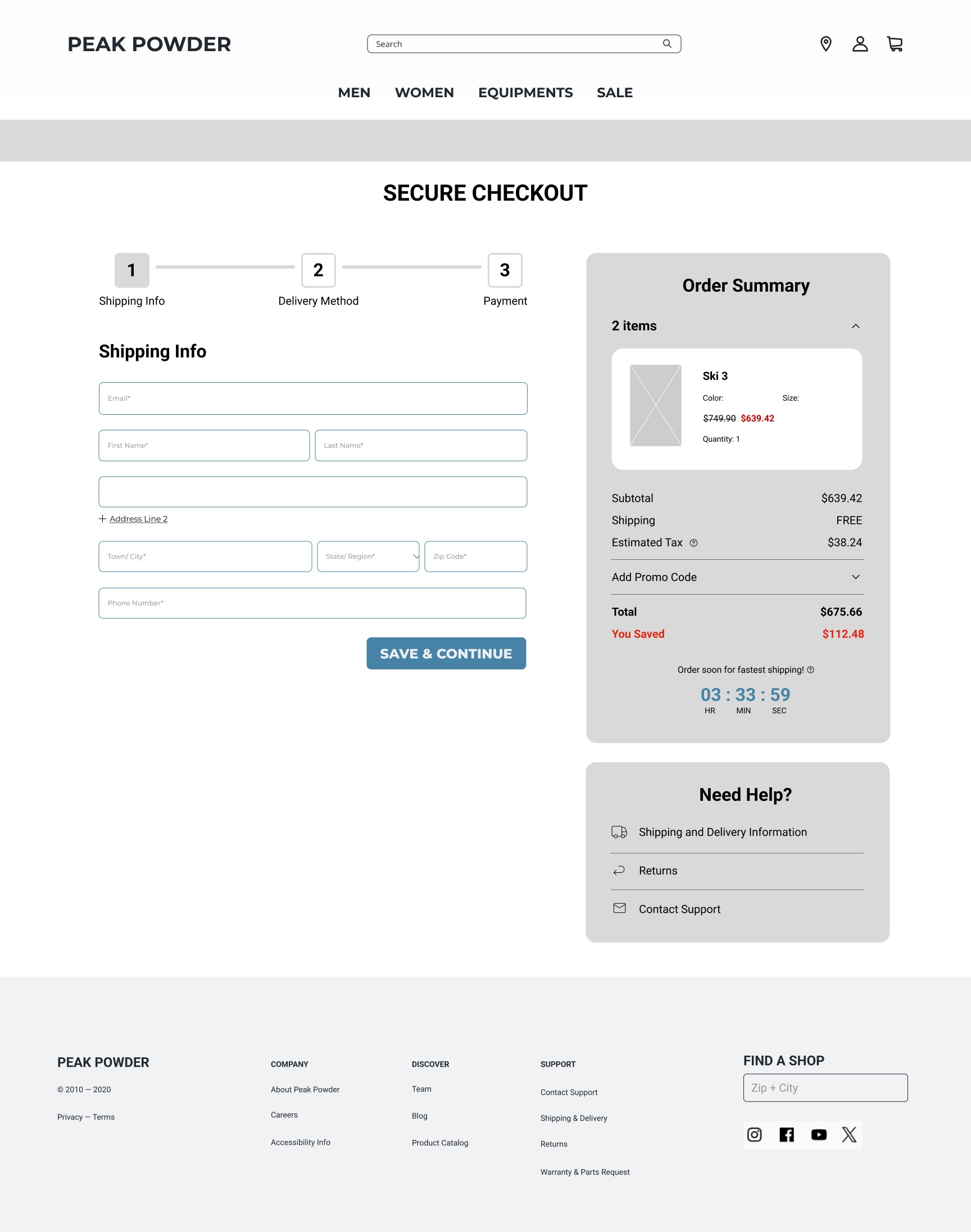
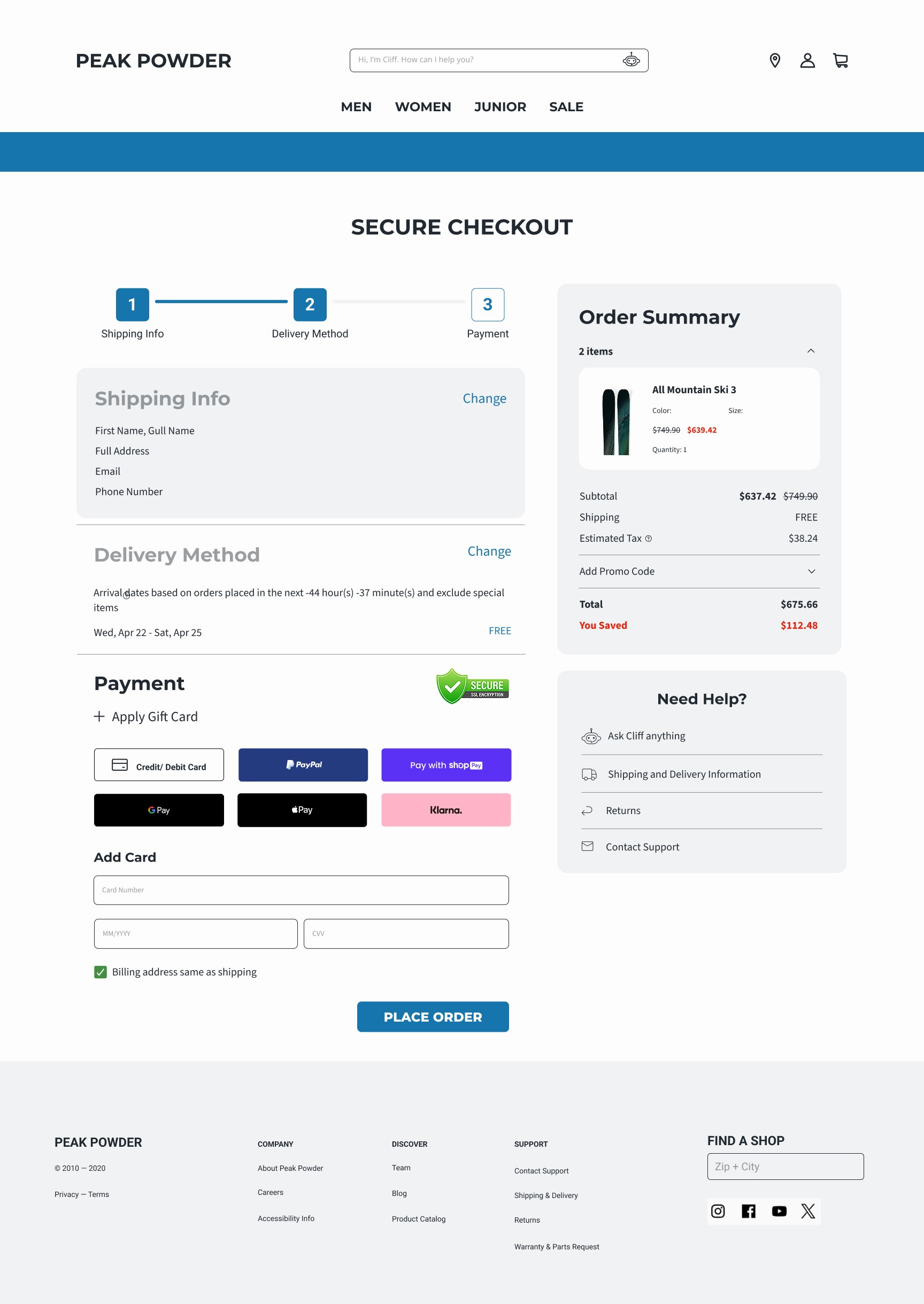
Short 3-step process to purchase with visual progress bar.
Persistent order summary throughout the checkout process.
Multiple ways of payment.
Two-column layout with member Sign In and Guest Checkout. Trust statement beneath the guest checkout.
Short 3-step process to purchase with visual progress bar.
Persistent order summary throughout the checkout process.
Multiple ways of payment.
Guerilla Testing
Guerilla Testing
Before committing to the high-fidelity design, I ran guerilla usability testing on the wireframe prototype. The goal was to surface friction early and validate my core design decisions before adding visual polish.
Before committing to the high-fidelity design, I ran guerilla usability testing on the wireframe prototype. The goal was to surface friction early and validate my core design decisions before adding visual polish.
Testing Overview
Testing Overview
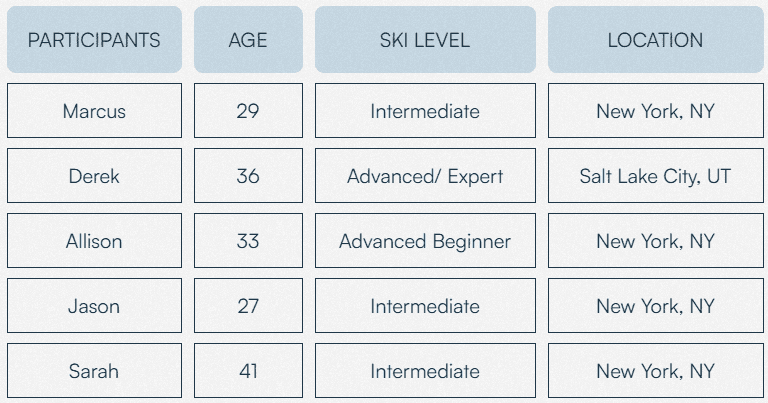
I conducted the test with 5 participants, 29-41 years old of different ski levels.
I conducted the test with 5 participants, 29-41 years old of different ski levels.
Each participant was given 3 scenarios: completing the ski finder quiz, using the comparison tool and going through guest checkout. Sessions were observed and notes were grouped into themes.
Each participant was given 3 scenarios: completing the ski finder quiz, using the comparison tool and going through guest checkout. Sessions were observed and notes were grouped into themes.
PARTICIPANTS
Marcus
Derek
Allison
Jason
Sarah
AGE
29
36
33
27
41
SKI LEVEL
Intermediate
Advanced/ Expert
Advanced Beginner
Intermediate
Intermediate
LOCATION
New York, NY
Salt Lake City, UT
New York, NY
New York, NY
New York, NY
5 Key Findings
5 Key Findings
1
Quiz results needed a direct path to purchase
Quiz results needed a direct path to purchase
4 of 5 participants completed the quiz successfully but weren't sure what to do with the results. They expected a clear "View Ski" or "Shop Now" CTA directly on each result card. Without it, the quiz felt like it ended abruptly rather than guiding them to the next step.
4 of 5 participants completed the quiz successfully but weren't sure what to do with the results. They expected a clear "View Ski" or "Shop Now" CTA directly on each result card. Without it, the quiz felt like it ended abruptly rather than guiding them to the next step.
2
Users wanted more results from the quiz and a clear reason for each
Users wanted more results from the quiz and a clear reason for each
"Why this ski?" was the most common unspoken question. Users expected 4–6 options, not 2, and they wanted a plain-language explanation of why each ski was recommended for them specifically. Generic product descriptions didn't feel personalized enough.
"Why this ski?" was the most common unspoken question. Users expected 4–6 options, not 2, and they wanted a plain-language explanation of why each ski was recommended for them specifically. Generic product descriptions didn't feel personalized enough.
3
Comparison page needed to serve both beginners and experts
Comparison page needed to serve both beginners and experts
Technical specs like "Tip Width" and "Tail Width" were meaningless to less experienced users. At the same time, experts needed those details. Users across skill levels expected the most important specs at the top.
Technical specs like "Tip Width" and "Tail Width" were meaningless to less experienced users. At the same time, experts needed those details. Users across skill levels expected the most important specs at the top.
4
Guest checkout worked but needed a trust signal
Guest checkout worked but needed a trust signal
3 of 5 participants expressed uncertainty about whether they'd receive an order confirmation or be able to track their order without creating an account. The path itself wasn't broken users found and used it but a one-line trust statement would close the confidence gap.
3 of 5 participants expressed uncertainty about whether they'd receive an order confirmation or be able to track their order without creating an account. The path itself wasn't broken users found and used it but a one-line trust statement would close the confidence gap.
5
The countdown timer felt manipulative and hurt the brand
The countdown timer felt manipulative and hurt the brand
2 of 5 users specifically called out the countdown timer as a red flag. One described it as "sales pressure I don't trust." This was a critical finding given Peak Powder's brand positioning as an expert, trustworthy pro-shop. The timer actively contradicted the experience the brand was trying to create.
2 of 5 users specifically called out the countdown timer as a red flag. One described it as "sales pressure I don't trust." This was a critical finding given Peak Powder's brand positioning as an expert, trustworthy pro-shop. The timer actively contradicted the experience the brand was trying to create.
The guerilla testing confirmed my core design decisions were right the quiz, comparison tool, and guest checkout all worked. What it revealed was that the details mattered enormously: the exit from the quiz, the explanation behind each recommendation, and the small moments where users needed reassurance.
High-Fidelity Iterations
High-Fidelity Iterations
Each of the five guerilla testing findings drove a specific design change in the move from wireframes to high-fidelity prototype. Nothing was changed arbitrarily every iteration was tied directly to observed user behavior.
Each of the five guerilla testing findings drove a specific design change in the move from wireframes to high-fidelity prototype. Nothing was changed arbitrarily every iteration was tied directly to observed user behavior.
Guided Selling Quiz
Guided Selling Quiz
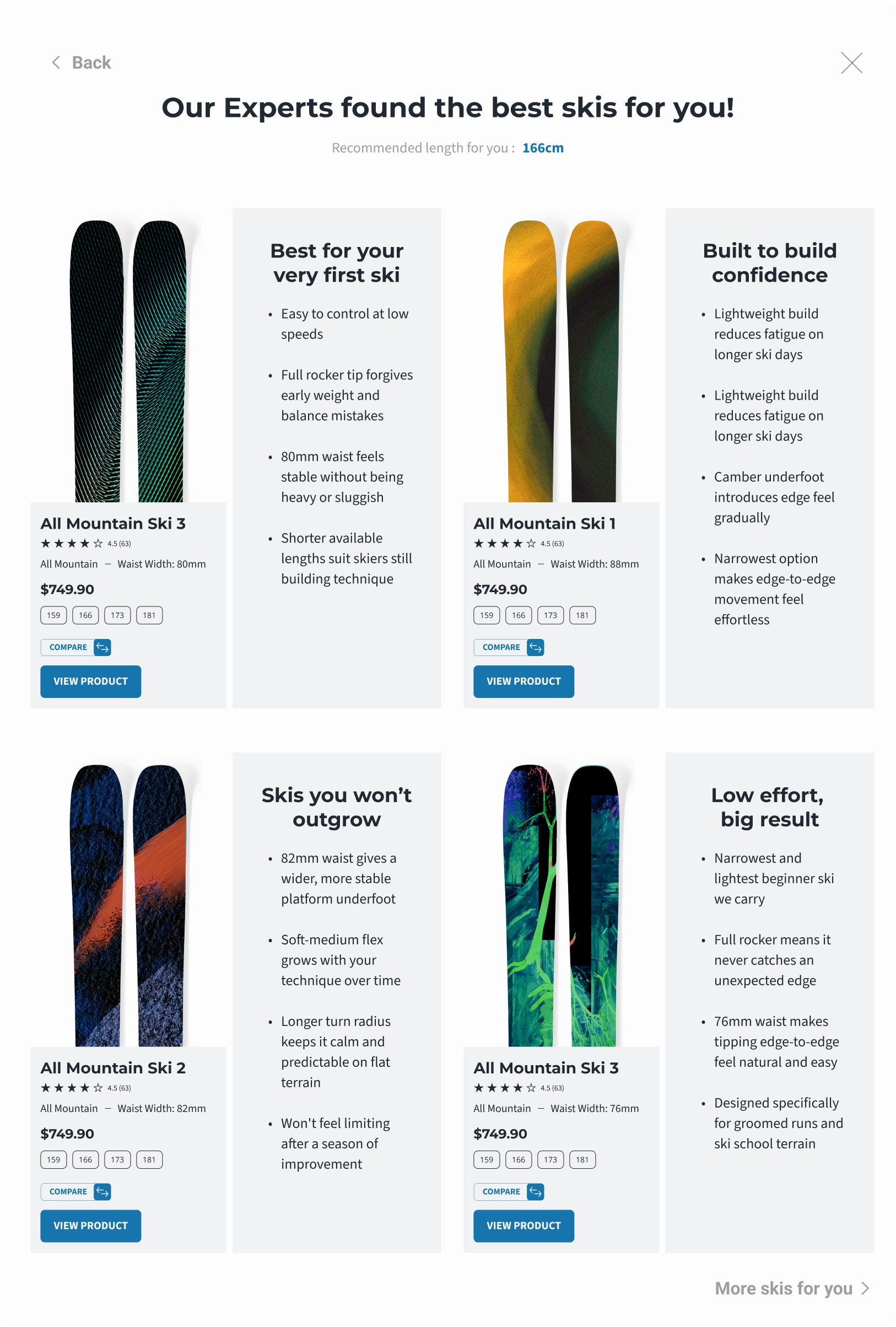
A prominent "View Ski" CTA was added to each result card, linking directly to the Product Detail Page.
An explanation of why the ski was matched to the user's quiz answers was added.
Results were expanded from 2 to 4 skis per path and a "More skis for you" button was added if users wanted to see more skis like the ones matched.
A prominent "View Ski" CTA was added to each result card, linking directly to the Product Detail Page.
An explanation of why the ski was matched to the user's quiz answers was added.
Results were expanded from 2 to 4 skis per path and a "More skis for you" button was added if users wanted to see more skis like the ones matched.
Wireframe
Wireframe
High-Fidelity Prototype
High-Fidelity Prototype
Comparison Page
Comparison Page
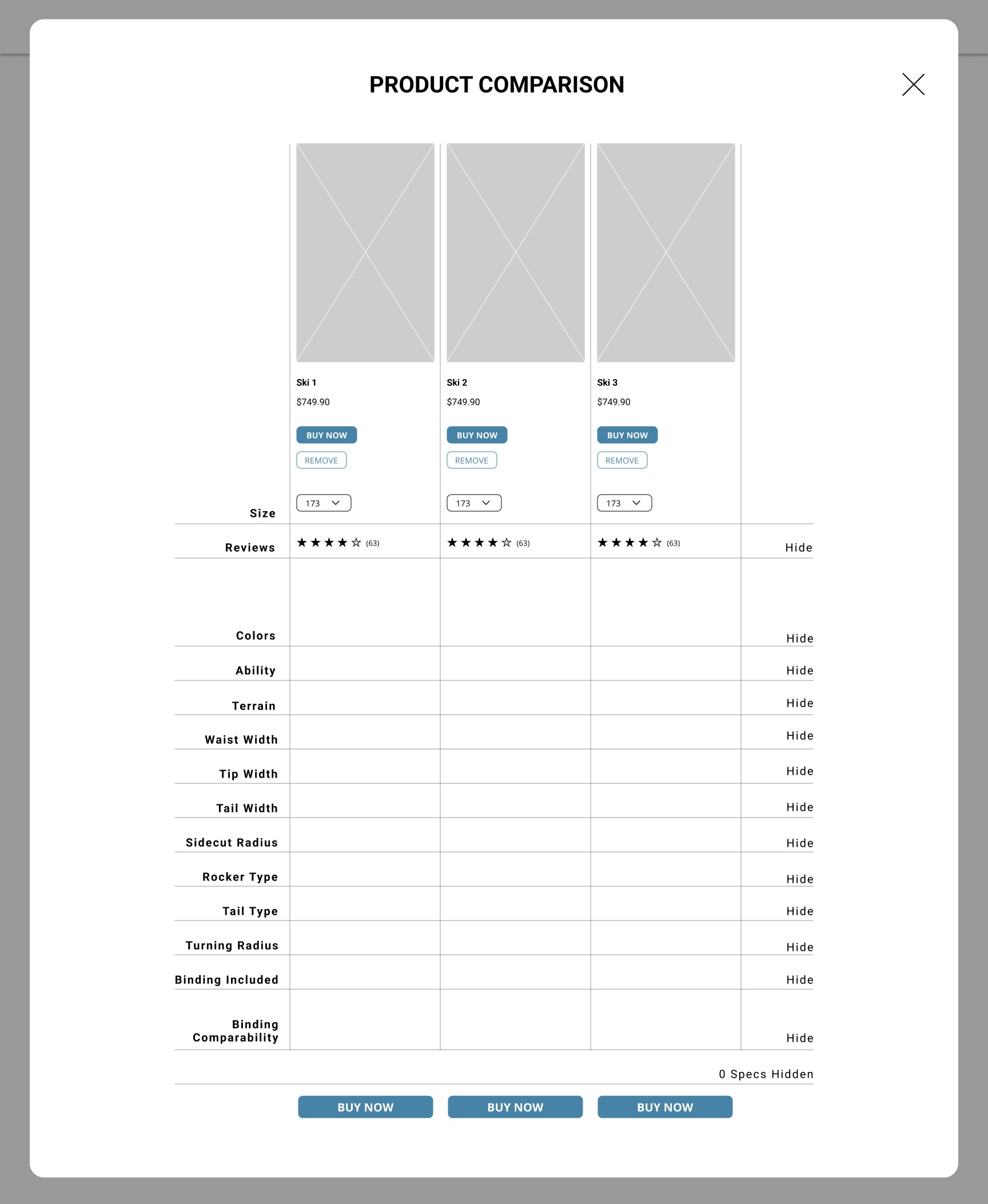
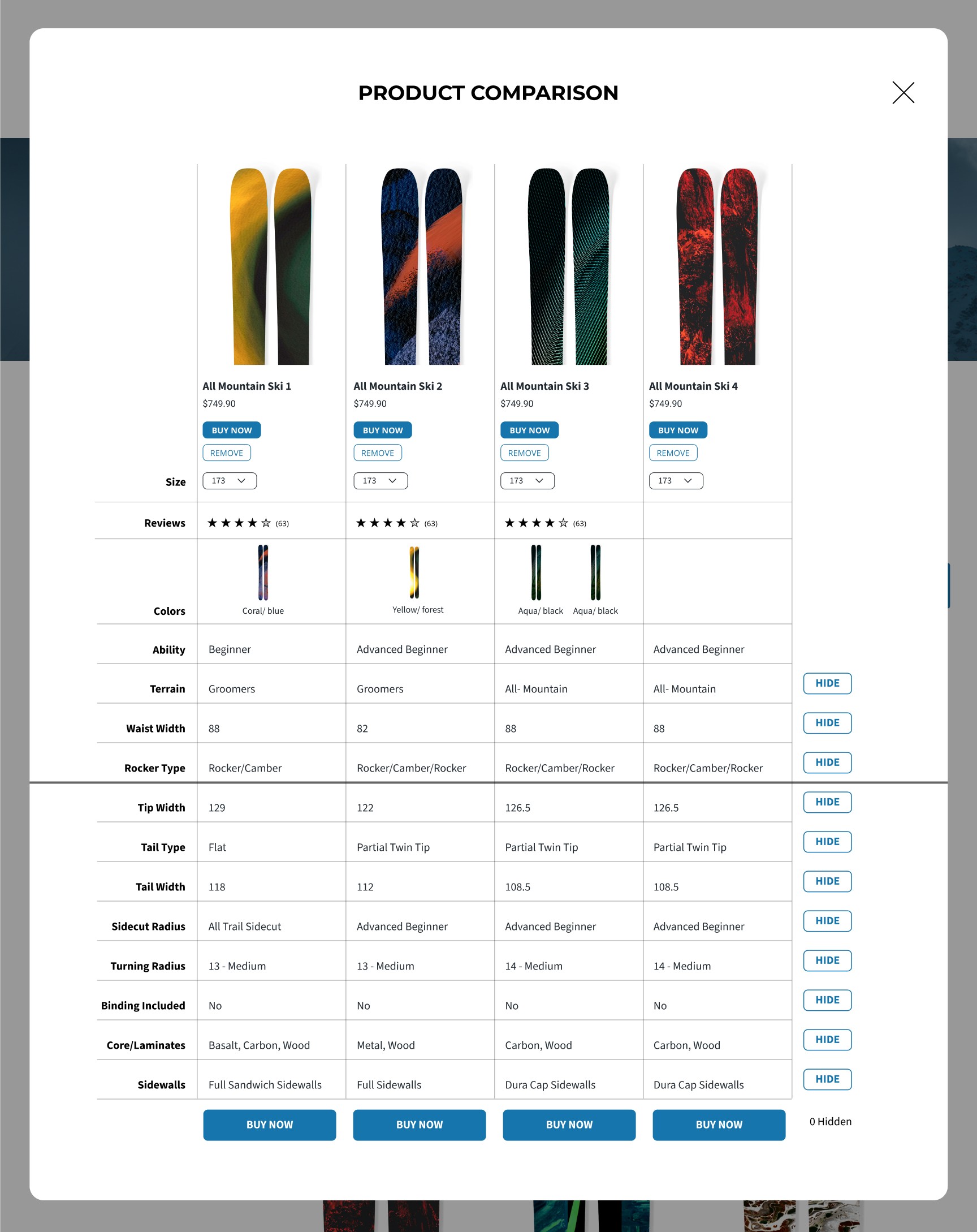
All main spec were kept at the top.
Less experienced users could focus at the top of the chart and the more experienced users can customize their view by hiding the rows they are not interested in.
All main spec were kept at the top.
Less experienced users could focus at the top of the chart and the more experienced users can customize their view by hiding the rows they are not interested in.
Wireframe
Wireframe
High-Fidelity Prototype
High-Fidelity Prototype
Checkout Process
Checkout Process
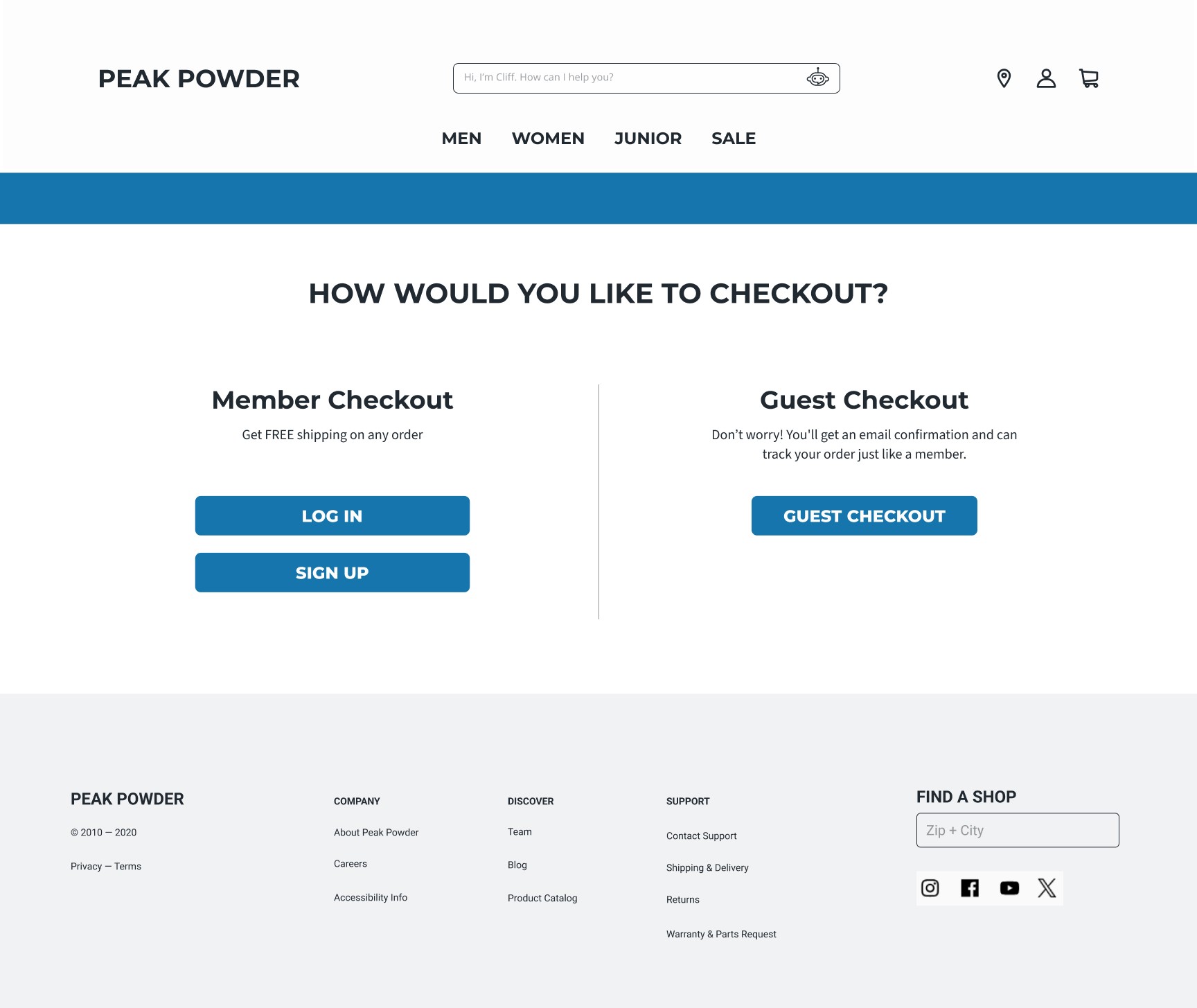
By modifying the line under the Guest Checkout to ""You'll receive an email confirmation and can track your order without creating an account." I addressed the top concern from the testing which was not being able to track their order without an account.
The countdown timer was removed entirely.
By modifying the line under the Guest Checkout to ""You'll receive an email confirmation and can track your order without creating an account." I addressed the top concern from the testing which was not being able to track their order without an account.
The countdown timer was removed entirely.
Wireframe
Wireframe
High-Fidelity Prototype
High-Fidelity Prototype
Usability Testing
Usability Testing
With the high-fidelity prototype built, we ran a second round of usability testing. Unlike the guerilla testing on wireframes, this round evaluated the full visual and interactive experience including the quiz flow, comparison tool, guest checkout, and the chatbot feature.
With the high-fidelity prototype built, we ran a second round of usability testing. Unlike the guerilla testing on wireframes, this round evaluated the full visual and interactive experience including the quiz flow, comparison tool, guest checkout, and the chatbot feature.
4 Testing Scenarios
4 Testing Scenarios
1
Ski Finder Quiz
Ski Finder Quiz
Goal: Can users discover and use the quiz with no instruction?
All 5 participants found and completed the quiz. Navigation was smooth; the branching logic felt natural. 2 of 5 participants expressed interest in adjusting their quiz answers after seeing their results either because a result didn't resonate, or because they wanted to explore a different path.
All 5 participants found and completed the quiz. Navigation was smooth; the branching logic felt natural. 2 of 5 participants expressed interest in adjusting their quiz answers after seeing their results either because a result didn't resonate, or because they wanted to explore a different path.
2
Comparison Tool
Comparison Tool
Goal: Can users meaningfully compare skis at any skill level?
All 5 participants used the comparison tool without prompting. All found it useful. Experts found the spec layout efficient. 2/5 would've like to know more about the specs they don't understand.
All 5 participants used the comparison tool without prompting. All found it useful. Experts found the spec layout efficient. 2/5 would've like to know more about the specs they don't understand.
3
Guest Checkout
Guest Checkout
Goal: Can users complete checkout without creating an account?
All 5 participants completed guest checkout without friction. The trust statement was noticed by 4/5.
All 5 participants completed guest checkout without friction. The trust statement was noticed by 4/5.
4
Chatbot / Pro-Shop Feature
Chatbot / Pro-Shop Feature
Goal: Can users discover where the chatbot is located?
All 5 participants were able to locate the chatbot in the search mode and checkout mode.
All 5 participants were able to locate the chatbot in the search mode and checkout mode.
High-Fidelity Prototype Iteration
High-Fidelity Prototype Iteration
The usability testing confirmed that the core experience worked. But two specific observations surfaced opportunities for this phase of iteration. These are not major redesigns, they're precision fixes that would meaningfully improve the flow.
The usability testing confirmed that the core experience worked. But two specific observations surfaced opportunities for this phase of iteration. These are not major redesigns, they're precision fixes that would meaningfully improve the flow.
Guided Selling Quiz- Results Page
Guided Selling Quiz- Results Page
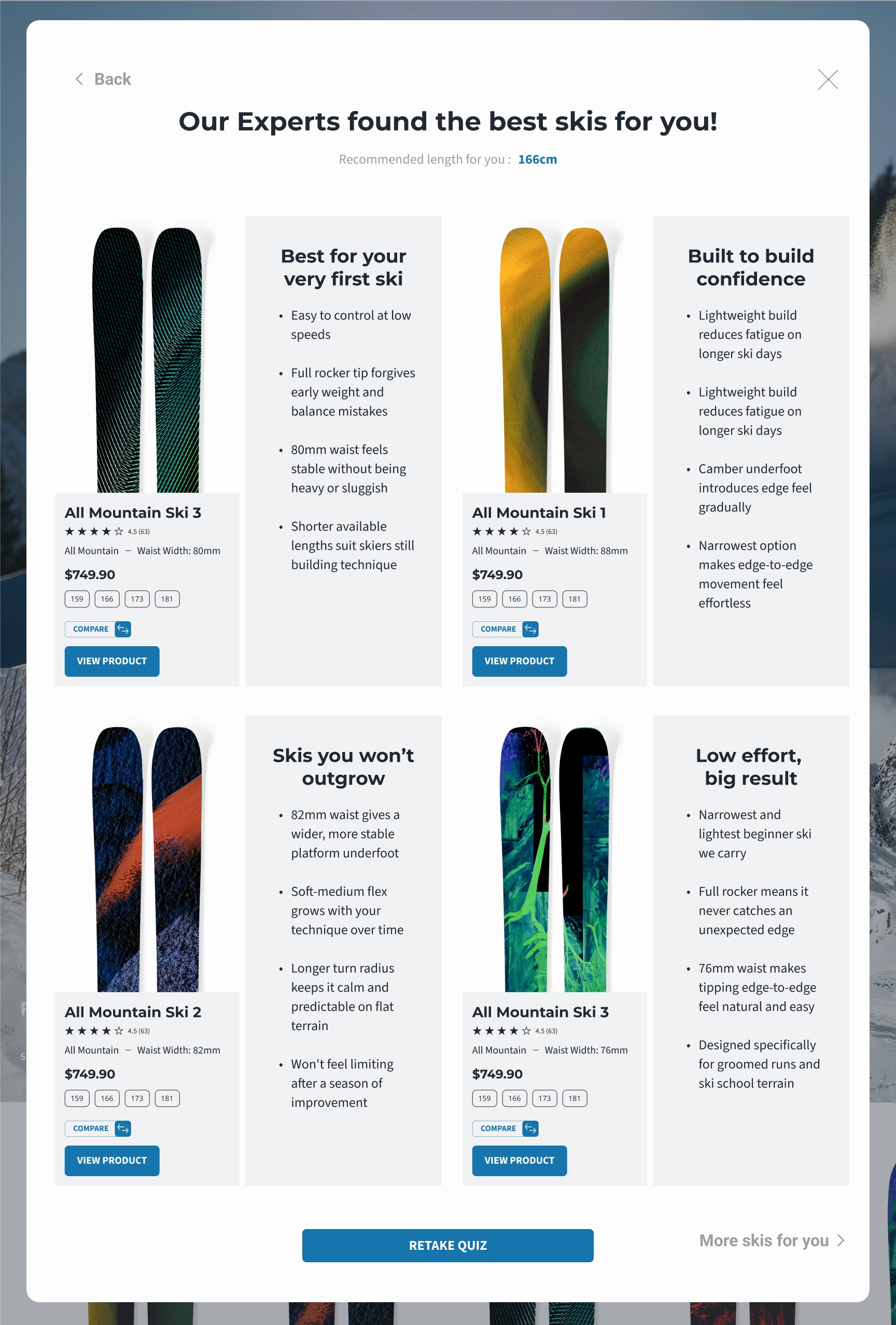
Participants expressed interest in adjusting their quiz answers after seeing their results either because a result didn't resonate, or because they wanted to explore a different path. I added a simple "Retake Quiz" button.
Participants expressed interest in adjusting their quiz answers after seeing their results either because a result didn't resonate, or because they wanted to explore a different path. I added a simple "Retake Quiz" button.
Comparison Page
Comparison Page
Some participants demonstrated interest in learning about the spec they don't understand. I added question mark icons on technical terms so they could learn without leaving the page.
Some participants demonstrated interest in learning about the spec they don't understand. I added question mark icons on technical terms so they could learn without leaving the page.
Conclusion &
Future Roadmap
Conclusion &
Future Roadmap
What was built, what was learned, and where this goes next.
What was built, what was learned, and where this goes next.
What Was Accomplished
What Was Accomplished
This project started with two clear business problems: 50% of users were browsing and leaving without buying, and 70% were abandoning their cart at mandatory account creation. Both problems were solvable through design and both were addressed.
This project started with two clear business problems: 50% of users were browsing and leaving without buying, and 70% were abandoning their cart at mandatory account creation. Both problems were solvable through design and both were addressed.
Designed a guided ski finder quiz that serves three distinct user skill levels (Beginner, Intermediate, Expert) with tailored questions, results, and recommendations written in plain language.
Built a comparison tool that speaks to beginners and experts simultaneously: spec-rich for experts, tooltip-supported for beginners.
Implemented guest checkout as the default path, with friction-reducing trust signals that were validated across both rounds of testing.
Validated every major design decision through two rounds of user testing: guerilla testing on wireframes, and structured sessions on the hi-fi prototype.
Designed a guided ski finder quiz that serves three distinct user skill levels (Beginner, Intermediate, Expert) with tailored questions, results, and recommendations written in plain language.
Built a comparison tool that speaks to beginners and experts simultaneously: spec-rich for experts, tooltip-supported for beginners.
Implemented guest checkout as the default path, with friction-reducing trust signals that were validated across both rounds of testing.
Validated every major design decision through two rounds of user testing: guerilla testing on wireframes, and structured sessions on the hi-fi prototype.
Future Roadmap
Future Roadmap
Mobile web version
AI-powered ski matching: combine quiz data with browsing behaviour for smarter recommendations
Expert endorsements and editorial "staff picks" integrated into results.
Enhanced chatbot with real-time inventory and availability queries.
Mobile web version
AI-powered ski matching: combine quiz data with browsing behaviour for smarter recommendations
Expert endorsements and editorial "staff picks" integrated into results.
Enhanced chatbot with real-time inventory and availability queries.
Prototype
Prototype
At a Glance